Login
Login


 24x7 Customer Care
 Visit Our Store


Tripura Sundari Temple
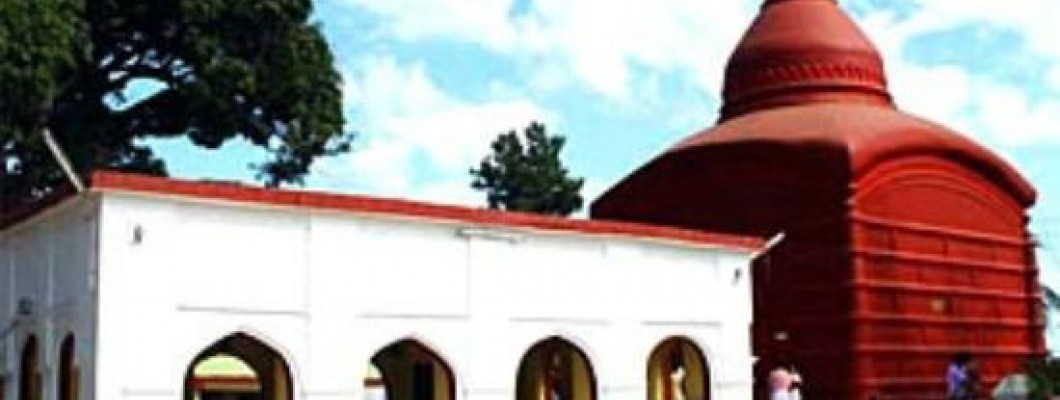
Maharaja Dhanya Manikya built the Tripura Sundari Temple in
1501 A. D. /1423 Saka Era. This is one of the holiest temples of Tripura
because the shrine of Tripura Sundari is one of the 51 peeths. One of the most
salient features of this temple is that the doors are always open for the
people of all casts and creed. For this reason, the temple has become so much
popular over the centuries.
Location Tripura, West Tripura, Agartala
Legend
King Dhanyamanikya, the ruler of Tripura during the 15th
century was making a temple for Lord Vishnu. But during the phase, he received
a divine message from Goddess Bhagavati (per chronicles) to consecrate the idol
of Goddess Tripurasundari at the hilltop where he was making the temple for Sri
Vishnu. The vision also ordered the King to collect the idol from Chittagong.
He sent one of his trusted men to receive the idol of Goddess Tripurasundari.
But next, he faced another dilemma that how he can consecrate the idol of Maata
Parvathi with Lord Vishnu because She is the consort of Lord Shiva. But once
again the oracle reappeared and according to the wishes of the ethereal command
King Dhanyamanikya placed the idol of Goddess Tripura Sundari at the temple of
Lord Vishnu. The temple is pious for both the Shaivaites and the Vaishnav
sects.
Architecture
The temple of Tripura Sundari is a small and square edifice
of 7 sq. meters at its base and the height of the architecture is 24 meters
approx. Though the temple is built in the Chala style of Bengal, the design of
the temple is tortoise shaped. The roof of the temple is similar to the humped
back of a tortoise. This is the reason why, the shrine is also known as 'Koorma
Peetha'. (Koorma means Tortoise). But the well maintained and the red
terracotta building of Maata Tripureswari entice the visitors.
Culture
Tripura, one of the notable North-Eastern states of India,
stands apart for enshrining their century-old heritage and the lineage of their
culture. Once, the princely state, Tripura maintained its independence even
during the British Raj in India. In 1974, Tripura accepted to be recognized as
an Indian State.
70% of its population is Bengalis and the rest of the 30%
belongs to the different tribes, residing in this area over the centuries and
much before the Vedic times.
Tripura is accredited for its enriched culture including
dance, music, musical theater and other performing arts. The people here are
grateful to the great poet Rabindranath Tagore for promoting Tripura in his
various literary creations like Rajarshi, Mukut, and Visharjan.
Their handicrafts, way of flamboyant dressing entice
travelers from other states and abroad.
The Manikya Dynasty established almost all the important
Hindu shrines across Tripura.
Darsan Info
Devotees can visit the temple from 06.00 a.m. to 10:00 p.m.
The Temple remains closed during -
Matri Sthan--8.00 AM--9.00AM
Anna Bhog & resting time of the Divine Mother from -
2.30 PM--3.00 PM
After Sayan Arati to Mangalarati
Photography is not allowed inside the temple premises.
Darsan Dresscode
Nothing Specific. But wearing modest clothes is suggested.
Famous Festival
April :- Bengali New Year
October :- Mahaastami Tithi
Every Amabasya is a
Special day
Temple Rituals
Along with the Nitya Puja, Bhog- Aarati is also offered to
the deity. One of the most special and exclusive rituals practiced here is
feeding the tortoises residing in the Kalyansagar, the pond by the temple. It
is said to be pious and lucky for the pilgrims. Thus, the devotees at the
Tripura Sundari Temple also visit the Kalyansagar and offer food to the turtles
there.
Special Rituals
Diwali, 'Uttarayan Sankranti' and 'Shiva - Chaturdashi', on
every Amabasya, Bengali New Years Day and Mahaastami Tithi are the days when
the deity is specially worshipped.
Additional Info

Hotel Royal Inn

Supermarket : Available
Related Products