
 Login
Login


 24x7 Customer Care
 Visit Our Store


Unakoti
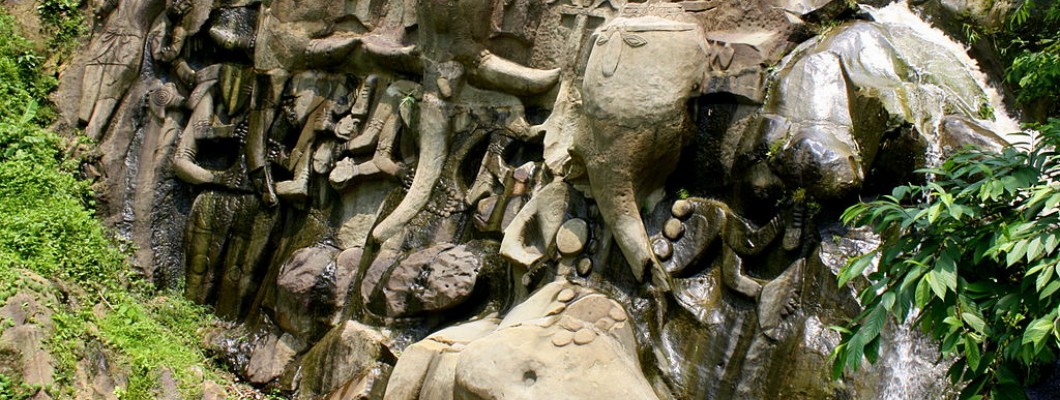
Unakoti hill is an ancient place of worship with huge rock
reliefs celebrating Lord Shiva. The word 'Unakoti' literally means one less a
kuti (crore) in Bengali. This historic pilgrimage spot is located at Unakoti
Tripura District in the Kailashahar Subdivision in the North-eastern Indian
state of Tripura. The sculptures of Unokati were created nearly around 7th to
9th centuries A.D, though the origin dynasty of the Shaivaite idols is still
unknown.
Location Tripura , Unokoti, Agartala
Legend
According to the legends, once Lord Shiva was heading
towards Kashi along with one crore god and goddess including him. On the way,
they took rest at this place. Before retiring for the night, Lord Shiva
informed all the Gods to follow him to Kashi in the morning. However, the Gods
remained asleep while Lord Shiva headed to Kashi himself. Thus, the angry
Mahadev cursed the Gods who were supposed to accompany Him to Kashi to stay
there in the form of stone forever. This is still believed to be the legend as
to why so many stone carved figures and rock images are there in the middle of
the serene jungle of Unakoti.
Architecture
The stone images of Unakoti are of two types- the rock
carved figures and the gigantic images made out of the stones laid there. The
Unakotiswara Kal Bhairava is the central Shiva Head which measures about 30
feet high and includes the 10 feet embroidered head-dress. There are two female
figures on both sides of Lord Shiva's Image; One of them is Maa Durga standing
with Her Lion. Three gigantic Nandi idols were excavated from the ground here.
The stone carved image of Lord Ganesha is enormous and stands to be one of the
major sculptures here.
Picture Courtesy: "Unakoti (Scorpian ad)" by
Scorpian ad at English Wikipedia. Licensed under CC BY-SA 3.0 via Commons - https://commons.wikimedia.org/wiki/File:Unakoti_(Scorpian_ad).JPG#/media/File:Unakoti_(Scorpian_ad).JPG
Culture
Tripura, one of the notable North-Eastern states of India,
stands apart for enshrining their century-old heritage and the lineage of their
culture. Once, the princely state, Tripura maintained its independence even
during the British Raj in India. In 1974, Tripura accepted to be recognized as
an Indian State.
70% of its population is Bengalis and the rest of the 30%
belongs to the different tribes, residing in this area over the centuries and
much before the Vedic times.
Tripura is accredited for its enriched culture including
dance, music, musical theater and other performing arts. The people here are
grateful to the great poet Rabindranath Tagore for promoting Tripura in his
various literary creations like Rajarshi, Mukut, and Visharjan.
Their handicrafts, way of flamboyant dressing entice
travelers from other states and abroad.
Darsan Info
The shrine entice both pilgrims and tourists. The best time
to visit the place is winter and specially during the Asokastami Mela, Kali
Puja, and Shiv Chaturdashi. Presently the temple is maintained by the
Archeological Survey of India and the century old architectural Shaivaite
wonder is now exclusively a historical place to visit.
Darsan Dresscode
No Specific Dress code to visit Unakoti
Famous Festival
April :- Ashokastami Mela
October :- Kali Pooja
Temple Rituals
Presently the temple is maintained by the Archeological
Survey of India and the century old architectural Shaivaite wonder is now
exclusively a historical place to visit.
Many religious fairs are arranged throughout the year
including the grand Asokastami Mela.
Special Rituals
People gather to worship Lord Shiva during the Asokastami
Mela held every year during April.
Additional Info

No Information available.

Related Products



.JPG#/media/File:Unakoti_(Scorpian_ad).JPG)