Login
Login


 24x7 Customer Care
 Visit Our Store


Sri Chennakesava Temple, Belur
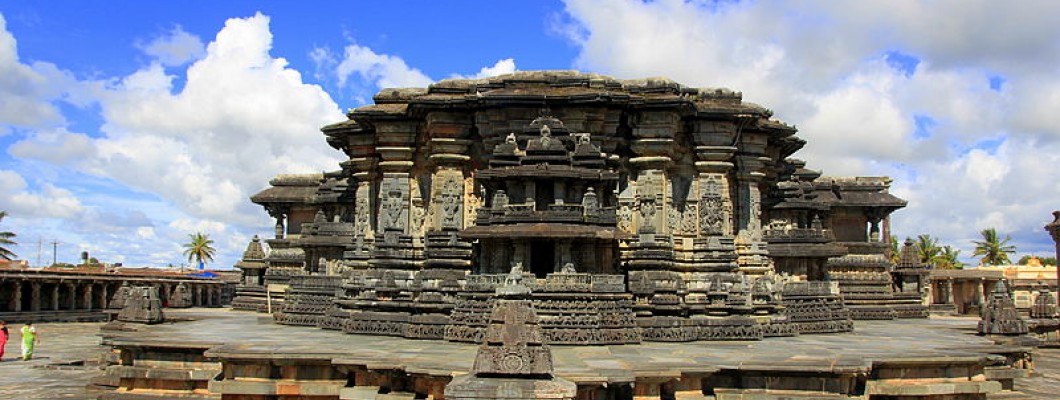
The Chennakeshava Temple originally called Vijayanarayana Temple was built on the banks of the Yagachi River in Belur, by the Hoysala King Vishnuvardhana. Belur, which was an early Hoysala capital, is in the Hassan district of Karnataka state, India. It is 40 km from Hassan city and 220 km from Bangalore. Chennakesava (which means "handsome Kesava") is a form of the Hindu god Vishnu. The temple was commissioned by King Vishnuvardhana in 1117 AD.
location Karnataka , Hassan, Bengaluru
Legend
Scholars are divided about the reasons for the construction
of the temple. The military successes of Vishnuvardhana is considered a
probable reason. Some scholars believe Vishnuvardhana commissioned the temple
to surpass his overlord, King Vikramaditya VI of the Western Chalukya Empire,
after his initial military victories against the Chalukyas. According to
another theory, Vishnuvardhana was celebrating his famous victory against the
Chola dynasty of Tamil country in the battle of Talakad (1116 AD), which
resulted in the annexation of Gangavadi (modern southern Karnataka) by the
Hoysalas. Another theory points to Vishnuvardhana's conversion from Jainism to
Vaishnavism after coming under the influence of saint Ramanujacharya,
considering this is a predominantly Vaishnava temple in sculptural iconography.
Architecture
The main entrance to the temple complex is crowned by a
Rajagopura. Within the complex, the Chennakesava temple is at the centre,
facing east, and is flanked by the Kappe Channigraya temple on its right and
Sowmyanayaki (Goddess Lakshmi) temple set slightly back. On its left, also set
slightly back is the Ranganayaki (Andal) temple. Two main sthambha (pillar)
exist here. The pillar facing the main temple, the Garuda (eagle) sthambha was
erected in the Vijayanagar period while the pillar on the right, the Deepa
sthambha (pillar with lamp) dates from the Hoysala period. The Chennakesava
temple has three entrances and their doorways have decorated dvarapalaka on
either side. The building material used in the Chennakesava temple is chloritic
schist or soapstone and is essentially a simple Hoysala plan built with
extraordinary detail. A large vestibule connects the shrine to the mandapa
(hall) which is one of the main attractions of the temple.
Culture
Hassan largely has a folk culture, whose traditions are
still practiced today in the city. The cuisine of Hassan is a combination of
Kodagu, Dakshina, Kannada, and Mysore regions, owing to its proximity to those
regions.
Picture Courtesy : commons.wikimedia.org
Darsan Info
Temple timings : 7:30 AM to 1:00 P.M and 2.30 PM to 7.30 PM
Darsan Dresscode
There is no special dress code though traditional wear is
preferred on festive days.
Famous Festival
Paush purinma
Duserra
Makara sankranthi
Temple Rituals
Morning Pooja and Harathi at 7:30 A.M daily.
Different types of archana and sevas are held on temple at
8:00 A.M onward.
Special Rituals
King Vishnuvardhana is said to have dreamt about Lord
Keshava during his night stay at the Baba Budan forest and decided to construct
the Channa Keshava temple at Belur. But, he unwittingly separated the lord from
his consort living on the baba Budan Hill. It is believed that the lord
regularly travels to the hills for meeting his consort. Thus the local cobbler
community presents a pair of fresh sandals everyday at the alter of the shrine.
Locals believe that the sandals get disappeared after after being presented the
Lord.
Additional Info

Vishwas Hotel
Gayathri Bhavan
Angels Family Restaurant Multi Cuisine

Supermarket : Available
Related Products