Login
Login


 24x7 Customer Care
 Visit Our Store


Nalateswari Temple, Maa Nalateswari Mandir
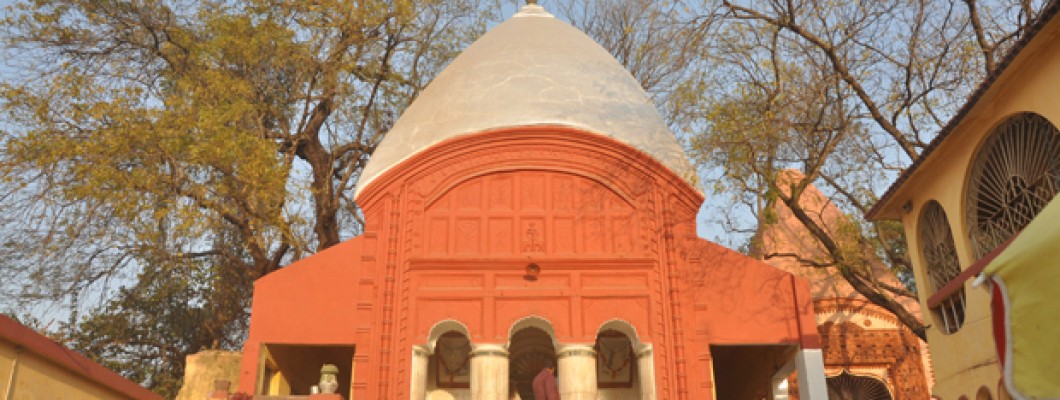
Nalhateshwari temple is one of the 51 Shaktipeethas where
parts of Sati's body fell. According to the mythologies it is here where the
"nala" or throat of goddess Shakti had fallen and so the shrine came
to be known as the Maa Nalateswari. It is located in Nalhati, a municipality in
Birbhum District of West Bengal near the West Bengal - Jharkhand border.
Location West Bengal , Birbhum, Kolkata
Legend
The foundation history of the of the Nalateshwari Shakti
Peeth is allied with the Dakshya Yajna and on the very day when Devi Sati
self-immolate Herself without bearing the pain of Her Lord Shiva's insult by
Her outrageous father Dakshya. To pacify the angry Shiva, performing Tandava
with corpse of Sati on His shoulder, Lord Vishnu let His Sudarshan Chakra to
mutilate the lifeless body of the Devi so that Lord Shiva can find solace. It
is believed that around 1400 years back, in 252th Bengali year, it was Lord
Kamdev who discovered the larynx of Devi Sati from the nearby Nalhati Forest.
Many other different legends are associated with this
ancient temple of Birbhum, Bengal. According to many, it was Ram Sharam
Devsharma who found the larynx of the Devi and started worshiping Maa
Nalateswari. In Bengali, larynx is known as 'Nala'. This is the source from
which the deity is known as Maa Nalateswari and the place is also named
Nalhati, for the shrine. It is said that there is a Nala under the throat of
the Devi's idol and how much water is poured, it never gets overflowed. In
fact, the sound of gulping the water is heard as humans do while drinking water
or any liquid.
It is also believed that it was Bramhachari Kushalnan who
first offered the 'Bhoga', which means the food offerings to the Goddess. This
worshipper attained moksha or salvation after worshipping and meditating after
sitting on a Pancha-munda-ashana.
This temple is part of the famous Shaktipeetha Darshan Yatra
of West Bengal.
Architecture
The terracotta designs on the quintessential 'aatchala
temple' of Bengal entice pilgrims. The temple architecture is very old and
signifies the presence of enriched Bengali heritage enshrined in the temple
designing. Inside the sanctum sanctorum- Mata Nalateshwari is consecrated. The
stone idol of 4 feet height has three eyes (trinetra) and a huge golden tongue
hanging in between the teeth. The larynx or the "Nala" of the deity
is positioned where the tongue ends. She drinks water creating the sound of the
gulping. On the way to the sanctum sanctorum or the garbha griha, Ganeshji is
sitting and is surrounded by eight snakes. Rani Bhavani of Natur constructed
the Ganeshji Shrine here.
At the northern side of the temple, the Pancha munda asana
is placed. There is also a Neem tree that offers sweet leafs. There is also the
foot prints of Mata Shasti preserved on an ancient tablet by this tree.
Culture
Known to be the 'mini-India' for its diverse geographical as
well as cultural variations, West Bengal is also popular for housing over 14
shakti peeths. Coming back to the culture of this eastern state of India, since
prior and the post-partition times, Bengal is famous for its enriched culture.
From Darjeeling to the Sundarbans, and from Puruliya to the 'Rarh' area of
Birbhum- each of the provinces has a unique cultural approach. Starting from
the Bengali music, dance, theater, literature, art, and notwithstanding the
mouthwatering cuisine- West Bengal has successfully created a mark for its
exclusive aesthetics in the world panorama.
Darsan Info
The temple timing is from 5.30 AM to 8.30 PM. Devotees can
choose to prefer Tuesday or Saturday to visit the temple as these two days are
considered the best ones per Shakta traditions.
Darsan Dresscode
Devotees are expected to be in modest and fresh clothes
while entering the mandir premise.
Famous Festival
October - Dusshera, Navratri
November - Kali Puja
Temple Rituals
The regular temple rituals start with the opening of the
Garbha Griha (sanctum sanctorum) sharp at 5.30 AM. At different intervals,
worshipping is performed by the temple purohits (Hindu priests). By noon, Devi
Nalateshwari and Her Bhairav is served with Rice Meal for Prasad. Per Hindu
rites, this is known as Anna Bhoga. Devotees can have the bhoga for their lunch
after the deities are served and worshipped.
By the evening the aarti is offered. A sanctified ambiance
is created with the continuous humming
of the Vedic mantra and the ringing of the brass bell when the priest moves the
burning oil lamps to glorify the deity's existence.Pilgrims are allowed to stay
and witness the pious event of presenting the aarti to the Devi.
At 8.30 PM, the Garbha Griha is closed as the gods are
believed to be retired for rest.
Sometimes, this schedule is changed during some special puja
or occasions. But it is notified to the devotees before.
Special Rituals
Animal sacrifice is still practiced here. Goats are
sacrificed on the harikath and in the strike of one chop the head is cut off
from the shoulder. The blood is collected in a pot and is offered to the Devi
to satisfy Her thirst. The devotees are offered with tilak of that blood as a
mark of blessing from the Holy Mother. Usually, on Tuesdays and Saturdays, the
bali or animal sacrifice is offered to the deity. On the fulfilment of one's
mannat (wish fullfilment), the goat sacrifice or double goat sacrifice is also
offered.
Additional Info

Kashi'r Hotel, Barnali
Haji Hotel

Supermarket : Available
Related Products