Login
Login


 24x7 Customer Care
 Visit Our Store


Tulja Bhavani Temple
Holding the head of the slain Mahishasura and weapons in her
outstretched eight hands, stands the imposing deity of Goddess Bhavani, the
'kuldevi' for the martial clans of Maharashtra. Her abode, Tulja Bhavani
temple, built in 12th century is among the Shaktipeeths. It is the family deity
of the Bhosale Royal family, the Yadavs and of many other families belonging to
different castes. Chhatrapati Shivaji is said to have been an ardent devotee
and always religiously visited the
temple. It is believed that the Goddess gifted him a sword - 'the Bhavani
sword' , a blessing for his victory.
Location Maharashtra, Osmanabad, Mumbai
Legend
Many legends are associated with the origin of the Tulja
Bhavani temple. The main legend mentions the story of sage Kardam's wife
Anubuti, who after her husband's demise performed a penance at the banks of
river Mandakini. While performing the worship, the demon Kukur tried to
distract her. The Goddess came to the defence of Anubuti and vanquished the
demon. From that day onwards, Goddess Bhavani came to be known as Tulja
Bhavani.
Another legend states that troubled by the havoc caused by
demon Matanga, the gods approached Goddess Bhavani for her help. She took the
form of destroyer and killed the demon.
A third legend states that Goddess Bhavani slayed demon,
Mahisha who was disguised as a buffalo.
She then took sanctuary on the Yamunachala hill where the temple is located
today.
This temple is part of famous Sade Theen Shakthipeet Darshan
Yatra.
Architecture
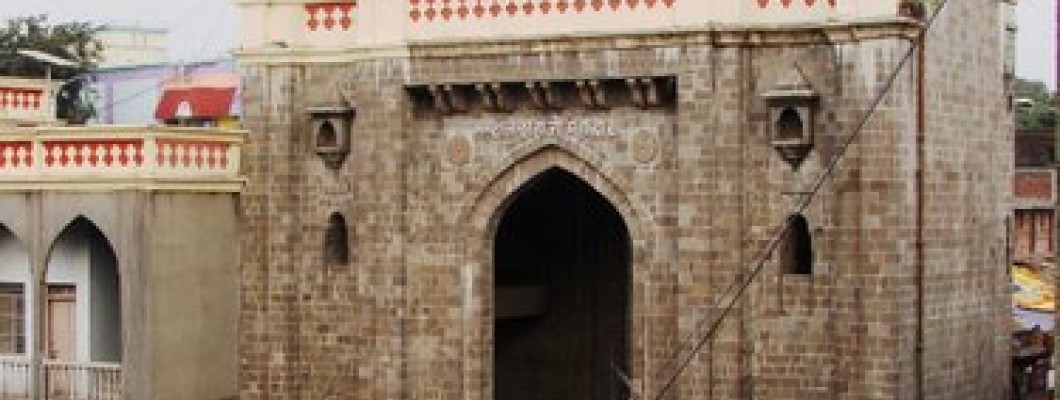
The main entrance of the shrine is named after Sardar Nimbalkar
while the other two after the parents of Shivaji. At the Sardar Nimbalkar
entrance, there is a temple dedicated to Markandeya Rishi. The main temple is
reached after descending a series of stairs. There is 'yagna kund' (Holy Fire
pit) in front of the temple. In the Gomukh Theerth on the right side and Kallol Theerth on the left side, devotees can
take a holy dip before entering the sanctum. A temple of Siddhivinayak and
goddess Annapurna are also present in the main complex.The idol of Goddess Tulja
Bhawani is believed to be 'swayambhu'(self-existing)
Pic courtesy: "Tuljabhavani Mandir Mahadwar (Main
entrance gate)" by Anjali Sajan - Own work. Licensed under CC BY-SA 3.0
via Commons - https://commons.wikimedia.org
Culture
Tuljapur town and the temple is closely associated to the
Bhonsale clan to which Chattrapati Shivaji belonged to and hence an important
cultural location in the Maratha history. The town welcomes a huge number of
people during the navratri festival, when the Tulja fair is also held.
Darsan Info
Tulja Bhavani Temple timings - 5.00 AM to 9:30 PM
Dharam darshan where you can go inside the Garbha griha
takes a longer time compared to Mukh darshan where you see the idol from around
30 feet. Avoid people who ask money to give you quick darshan of the deity.
Darsan Dresscode
Devotees are advised to wear clean and conservative clothing
while visiting Tulja Bhavani Temple. According to local beliefs, married women
are supposed to enter the temple wearing green bangles.
Famous Festival
April - Gudi Padva (Mar/April)
October - Navrathri, Vijayadashami
Temple Rituals
Temple priests perform rituals like Puja, Abhishek, aarti
etc at Tulja Bhavani. During every Aarti,
musical instruments such as tal, dimdi and zanj are played.
Special Rituals
Before the Puja starts, the large drums in the drum house
(Nagarkhana) of Tulja Bhavani temple are played loudly. It is a call to prayers
for the devotees.
Additional Info

Eateries near Tulja Bhavani -
Jagadhamaba devi veg restaurant
Hotel Samadhan

Supermarket : Available
Related Products