Login
Login


 24x7 Customer Care
 Visit Our Store


Thottuva Dhanwanthari Moorthy Temple
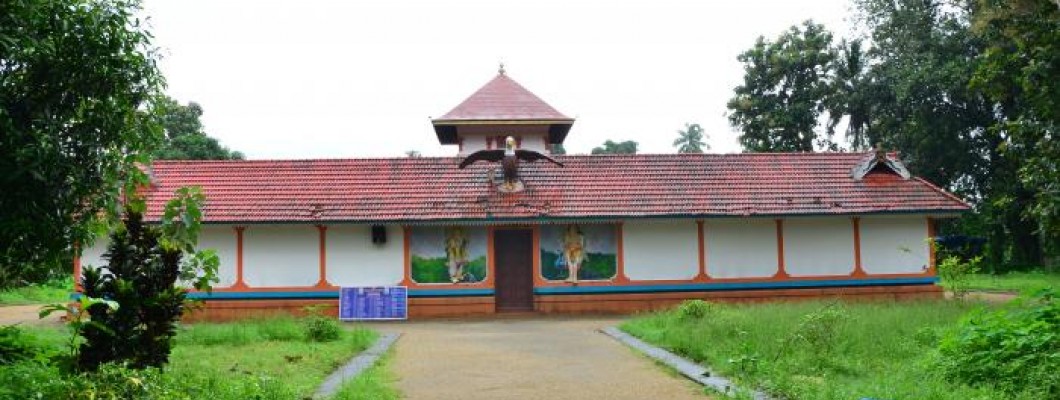
Located in Thottuva, Kerala, Thottuva Dhanwanthari temple is
the only temple in Kerala dedicated to Lord Dhanwanthari. It is believed that
the temple is more than 1000 years old.
Location Kerala, Ernakulam, Thiruvananthapuram
Legend
According to the legends, three Namboodiri families used to
live in the hills of Malayatoor. One day Sankaracharya happened to visit these
Namboodiri families. However, Sankaracharya was not offered food or alms and
this made him unhappy. He cursed those families. The family was ruined and so
they left the place and traveled to neighboring place Kodanad. On the way when
they felt hungry, they prepared food in three different pots. They used bamboo
as firewood. Two of them lighted the bamboo turning upwards and one turned it
downwards. The two Brahmins who had lighted the bamboo by keeping it upwards
were able to cook the food very quickly and after eating the food they
continued their journey. All the places through which they traveled became
their own. The other Brahmin was unable to cook the food soon because he had
lighted the bamboo turning it downwards. So he started his journey slowly and
reached the place where the present temple is situated. Keeping his umbrella on
the ground he started preparing the 'Nivedyam' for the evening Pooja and having
the food he went to sleep. He got a vision of Lord Dhanwanthari in his sleep
telling him not to worry. The place where the Namboodiri had kept his umbrella
came to be known as Kudappadom.
Architecture
The temple follows the patterns of Kerala architecture,
which has got unique characteristics. It is in contrast to the Dravidian
architecture as practiced in others of South India. Even though influence of
Dravidian architecture is found in Kerala style, it also has prominent shades
of Indian Vedic architectural science (Vastu Shastra) and also stamps of the
historical influence of contact with maritime trading partners like Chinese,
Arabs and Europeans. Classical Indian architectural works like the
Tantrasamuchaya, Thachu-Shastra, Manushyalaya-Chandrika and Silparatna also
find their influence in Kerala Architecture.
Culture
Kochi has a diverse, multicultural, and secular community
consisting of Hindus, Christians, Muslims, Jains, Sikhs, Konkanis and Buddhists
among other denominations. Today, the population of the city is a mix of people
from all parts of Kerala and most of India. The city's pan-Indian nature is
highlighted by the substantial presence of various ethnic communities from
different parts of the country.The presence of the headquarters of the Southern
Naval Command adds to the cosmopolitan nature of the city.
The people are also increasingly fashion-conscious, often
deviating from the traditional Kerala wear to western casual clothing.Kochi has
also played host to a number of high profile fashion shows, including ones
sponsored by Fashion Television.Kochi is also the venue of the annual Cochin
Flower Show
Darsan Info
The temple belongs to Koramboor Mana family.The temple is
run by Sree Dhanwanthari Moorthi Seva Trust. On the southern side of the temple
there is a small stream which flows towards the east. The practice is to have
bath in this stream and then enter the temple for Darshan. It is believed that
problems due to Vatha, Pitha and Kapha get cured if the devotees stay here and
meditate.
Darsan Dresscode
No Specific Dress Code. Traditional Dress preferred for both
men and women.
Temple Rituals
The presiding deity is Dhanwanthiri and the idol is almost
six feet tall and facing east. On the right hand the lord holds Amrith and with
the left hand the lord holds Atta, Shanku and Chakra. Sub deities are Ayyappan,
Ganapathy, Bhadrakali and Rakshas.
Special Rituals
From the first to the eleventh day of the Dhanu month in
Malayalam Era, the Lord is made up in the Dasavatara forms. This is known as
Dasavataram Chartal. This practice is considered to be special and is
associated with fertility.
Additional Info

Kodavath Restaurant Badayis Coffee Shop KTDC Family
Restaurant

Supermarket : Available
Related Products