Login
Login


 24x7 Customer Care
 Visit Our Store


Sri Radha Raman Mandir, Sri Radha Raman Temple
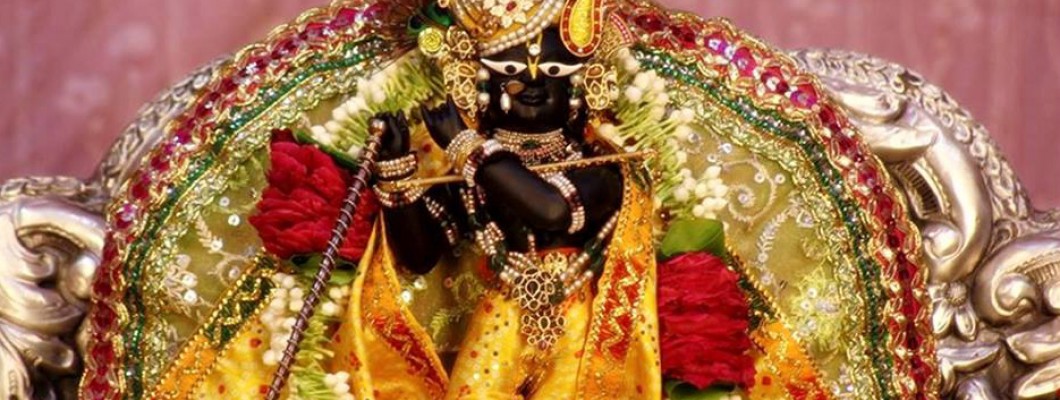
Sri Radha Raman Mandir or Sri Radha Raman Temple is one among the 7 temples of Thakur of Vrindavan including Sri Radhavallabh ji, Shri Bankey Bihari Ji, Shri Govind Dev ji and three others dedicated to Lord Krishna. Constructed at the request of Gopala Bhatta Goswami at around 1542 AD, the temple houses the original shaligram deity of Krishna alongside Radharani. It is one of the most revered temples in Vrindavan, especially by the followers of Gaudiya Vaishnavism.
location Uttar pradesh, Mathura, Lucknow
Legend
According to the legends, Gopala Bhatta Goswami came to
Vrindavan at the age of thirty. Gopala Bhatta Gosvami felt intense separation
from the Lord after the disappearance of Chaitanya Mahaprabhu. Once the Lord
instructed Gopala Bhatta in a dream, "If you want my darshan then make a
trip to Nepal". Gopala Bhatta reached Nepal and he bathed in the famous
Kali-Gandaki River. While dipping his waterpot in the river, Gopala Bhatta was
surprised to see several Shaligrama shilas enter his pot and he dropped the
shilas back into the river. However, the shilas re-entered his pot when he
refilled it and he found twelve Shaligrama shilas. Once a wealthy man came to
Vrindavana and offered Gopala Bhatta a variety of clothes and ornaments for the
Shaligramas in charity. However, as Gopala Bhatta couldn't use the clothes and
ornaments for the round-shaped Shaligramas, Gopala Bhatta advised the donor to
give the deity decorations to someone else. It is believed that the donor
refused to take them back and Gopala Bhatta kept the clothes and ornaments with
his shilas. Once on the Purnima (full moon) day, after offering naivedhya to
his Shaligrama shilas, in the evening, Gopala Bhatta put them to rest covering
them with a basket. When Gopala Bhatta uncovered the Shaligramas in the morning
in order to render puja, he saw a idol of Krishna playing the flute amongst
them. There were now only eleven shilas and a idol.
Architecture
The temple is exquisitely crafted in Rajasthani style of
architecture. The main temple structure comprises the sanctum and the
mukhamandapa, a front mandapa or hall. The sanctum has a ceiling in the form of
a large blossoming lotus. The temple has a finely carved shikara (pinnacle)
above the sanctum. The main entrance to the temple is made through a door that
has carved lintels and a multi-lobed arch in its middle. Both the structures
are laid out on the same plan having an altar, a mandapa with projections and a
porch.
Culture
The culture of the people of Uttar Pradesh is very much
fascinating and captivating. The people are known for their rich cultural
heritage where they adhere to their traditional customs and practices. Apart
from its natural gifts the people have nurtured a rich heritage of cultural
elements. The people of Uttar Pradesh take the pride of bestowing the two great
epics in Indian history namely Mahabharata and Ramayan. The culture of Uttar
Pradesh, thus, has rightly imbibed this trend and manifested it in its various
features. It is highly essential to mention about the fairs and festivals
celebrated by the people which gives a glory to the culture of the people.
Apart from the national festivals like Holi, Diwali and Makar Sankranti which
are celebrated with great fervor the people also fete on many regional
festivals and fairs like Taj Mahaotsav which attracts people from all over the
globe. This festival recalls the inheritance of the Mughal era by displaying
the fine marble replica toys of the Taj, Mughal jewelry, 'zari' clothing and
much more.
Darsan Info
In Summer
Mangala Arati – 04:00 AM
Darshan – 08:00 AM to 12:30 PM
Evening Darshan - 06:00 PM to 08:00 PM
In Winter
Mangala Arati – 05:30 AM
Darshan – 08:00 AM to 12:30 PM
Evening Darshan – 06:00 PM to 08:00 PM
Darsan Dresscode
Need to wear traditional attire on special days and avoid
shorts for men
Famous Festival
Krishna Janmashtami, Radhastami
Additional Info

Ammaji's Restaurant, 11 FLOWERS Rooftop AC Restaurant,
Dasaprakash Restaurant Vrindavan

Related Products