Login
Login


 24x7 Customer Care
 Visit Our Store


Kailasa temple, Kailasanatha temple
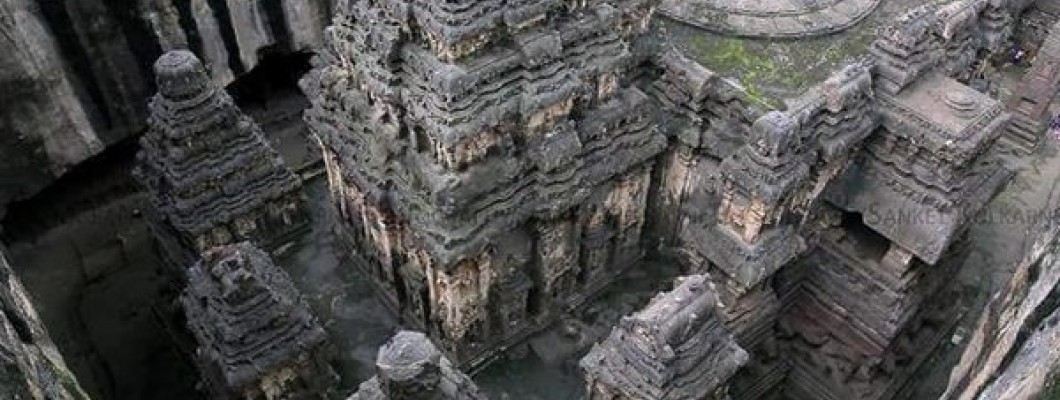
Located in Ellora, Maharashtra, Kailasa temple or Kailasanatha temple (Cave 16) is one of the largest rock-cut ancient Hindu temple dedicated to Lord Shiva. It is one of the most remarkable cave temples in India because of its size, architecture and sculptural treatment. A megalith carved out of one single rock, the Kailasanatha temple is one of the 32 cave temples and monasteries collectively known as the Ellora Caves. The Kailasa temple construction was attributed to the 8th century Rashtrakuta king Krishna I in 756-773 CE. However, some other parts of the temple complex was commissioned by later rulers.
location Maharashtra, Aurangabad, Mumbai
Legend
There is no doubt that the Kailasa temple was commissioned
by a Rashtrakuta ruler, generally attributed to the Rashtrakuta king Krishna I
(r. 756-773 CE), based on two epigraphs that link the temple to
"Krishnaraja".The Baroda copper-plate inscription (c. 812-813 CE) of
Karkaraja II (a ruler of a Rashtrakuta branch of Gujarat) mentions Krishnaraja
as the patron of Kailasanatha, and also it mentions a Shiva temple at Elapura
(Ellora). It states that the king constructed a temple so wondrous that even
the gods and the architect were astonished. It is believed by most scholars
that this is a reference to the Kailasa Shiva temple at Elora. However, the scholars
believes that the construction of the temple spanned the reigns of multiple
kings.
Architecture
The temple architecture shows traces of Pallava and Chalukya
styles. The entrance to the temple courtyard features a low gopuram. Most of
the deities at the left of the entrance are Shaivaite (followers of Lord Shiva)
while on the right hand side the deities are Vaishnavaites (followers of Lord
Vishnu). A two-storeyed gateway opens to reveal a U-shaped courtyard. The
courtyard is edged by a columned arcade three stories high. The arcades are
punctuated by huge sculpted panels, and alcoves containing enormous sculptures
of a variety of deities. Originally flying bridges of stone connected these
galleries to central temple structures, but these have fallen.Within the
courtyard, there is a central shrine dedicated to Shiva, and an image of his
mount Nandi (the sacred bull). The central shrine housing the lingam features a
flat-roofed mandapa supported by 16 pillars, and a Dravidian shikhara.The
shrine – complete with pillars, windows, inner and outer rooms, gathering
halls, and an enormous stone lingam at its heart – is carved with niches,
plasters, windows as well as images of deities, mithunas (erotic male and
female figures) and other figures. As is traditional in Shiva temples, Nandi
sits on a porch in front of the central temple. The Nandi mandapa and main
Shiva temple are each about 7 metres high, and built on two storeys. The lower
stories of the Nandi Mandapa are both solid structures, decorated with elaborate
illustrative carvings.The base of the temple has been carved to suggest that
elephants are holding the structure aloft. A rock bridge connects the Nandi
Mandapa to the porch of the temple. The base of the temple hall features scenes
from Mahabharata and Ramayana.
Culture
Ellora occupies a relatively flat rocky region of the
Western Ghats. Ancient volcanic activity in this area created many layered
basalt formations, known as Deccan Traps. Formed during the volcanic activity
of the Cretaceous geological period, one such west-facing cliff houses the
Ellora Caves. Its vertical face made access to many layers of rock formations
easier, enabling architects to pick basalt with finer grains for more detailed
sculpting.
Darsan Info
Morning 09:00 AM To 05:00 PM
Darsan Dresscode
Wear neat and modest clothes
Additional Info

Kailash Veg. Restaurant, Ellora Restaurants

Related Products