Login
Login


 24x7 Customer Care
 Visit Our Store


India's Longest Pilgrimages End in Just a Few Seconds. Why Do We Do It?
Six hours in a queue. Twenty-four hours in another. A 14-km mountain trek. Three days among millions of people for a holy dip. All for a few moments of darshan, a holy dip, or simply the experience of being there.
Why?
I once told my friends about my visit to Tirupati temple, where I stood in a queue for more than six hours for a darshan that lasts barely two or three seconds among thousands of pilgrims waiting for that fleeting glimpse of the deity before they move on. That immediately turned into an informal comparison of pilgrimage experiences. Another friend chimed in with his experience in Sabarimala where he stood in line during Mandalakala (41-day sacred pilgrimage season) for more than 24 hours for a similar darshan.
Not to be outdone, another friend talked about his 14-km trek to the high-altitude shrine of Kedarnath nestled in the heart of Himalayan peaks, which he reached after a long day’s walk. He reached by the time of evening arti, but did not enter the temple. For him, reaching Kedarnath was the primary thing. “I felt I had already arrived at my destination. The darshan was just a tick mark,” he said.
A country connected by sacred journeys
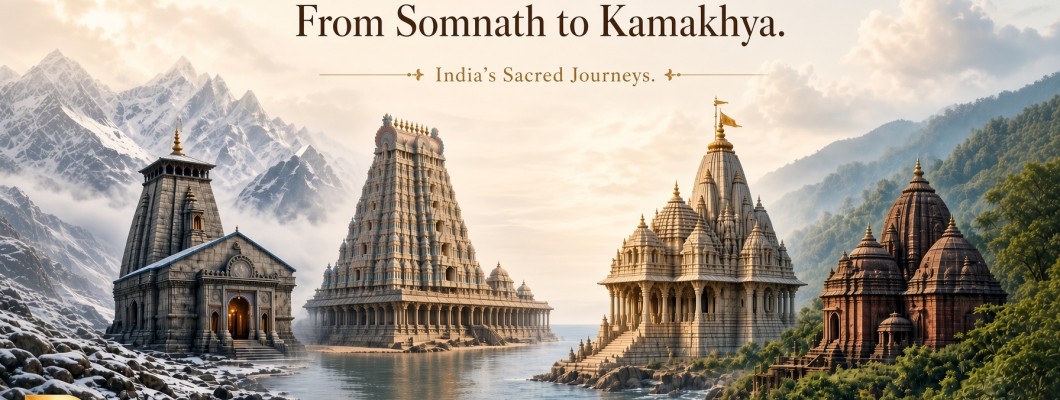
From Somnath on the Arabian Sea to Kamakhya in the hills of Assam, pilgrims have crossed vast distances for centuries, following different traditions but driven by the same timeless impulse: faith that makes the journey worthwhile.
Why do we do this? Why did Shankaracharya travel from Kerala to distant corners of India, spreading the message of Sanatana Dharma? Our temples, spread across the length and breadth of the country, and pilgrimages like the Kumbh Mela or Amarnath Yatra are more than places of worship or annual events. They are repositories of a civilization's collective memory, shaped by centuries of faith, stories and worship.
Perhaps that is why people make week-long journeys for a single dip in the Ganges. Are they cleansed of their sins in that dip…we do not know.
Each of us experiences this in different ways. We may not all seek the same thing from a pilgrimage. For some, it is faith. For some, peace. For some, fulfilment. For some, simply the feeling of having made it there. That is why the same 24-hour wait, or the same few seconds of darshan, can mean something completely different to each person.
The pilgrimage does not end with the journey. The moments and memorabilia become part of our very existence – not just for us, but for our families. Which is why you will find a conch from Kanyakumari in a North Indian household or Gangajal from Haridwar in a pooja room in Kerala.
Perhaps that is what binds us. Different languages. Different regions. Different ways of worship. Yet millions of us continue to answer the same call: to leave home, make the journey and stand, even if only for a few seconds, in a place that means something, if not everything, to us.
Share your experiences with us in the comments.
#Pilgrimage #India #SpiritualIndia #Yatra #SanatanaDharma #Travel #Pilgrimaide