Login
Login


 24x7 Customer Care
 Visit Our Store


Hanuman / Anjaneya Temple, Delhi
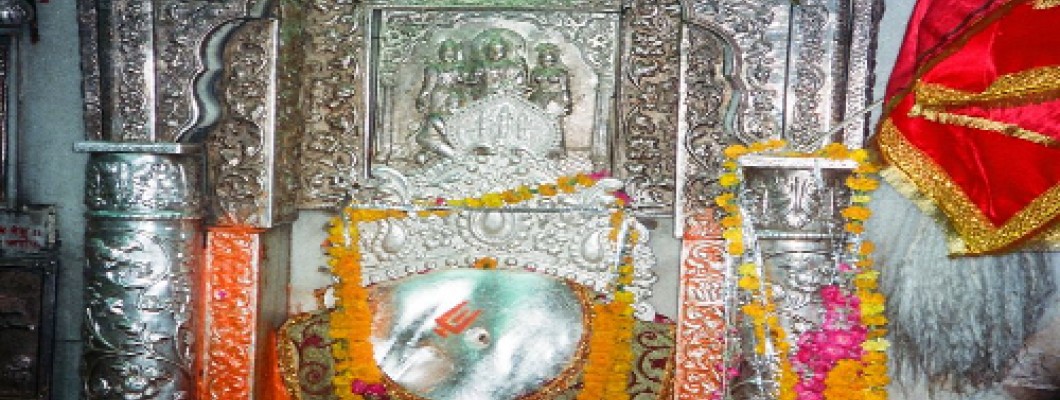
Located at Connaught Place, New Delhi, Sri Hanuman / Anjaneya temple widely known as 'Pracheen Hanuman / Anjaneya Mandir' is a famous and ancient temple dedicated to Lord Hanuman. Sri Hanuman Temple is also revered as one of the five temples of Mahabharata days in Delhi. It is believed that the temple was built during 1542-1605 by Maharaja Man Singh I of Amber. The temple was said to be reconstructed in 1724 by Maharaja Jai Singh, the Rajput ruler of the kingdom of Amber during the period of 1688-1743. The specific feature of this temple is that, the mantra "Sri Ram, Jai Ram, Jai Ram" is chanted for 24 hours in this temple since 1964 and is asserted that this mantra has been recorded in the Guinness Book of World Records.
location Delhi, Delhi, Delhi
Legend
According to the legends, during the exile of Pandavas,
Hanuman / Anjaneya appeared in the forest disguised as a weak and aged monkey
in order to subdue Bhima's arrogance about his strength. while searching for a
fragrant flower sought by Draupadi in the forest, Bhima found Hanuman lying
with his tail blocking his way. Unaware of Hanuman's identity, Bhima asked him
to remove his tail and Hanuman told Bhima to lift the tail since being old he
was unable to do it on his own. With arrogance, Bhima tried to lift the tail
with his one hand; however, he cannot lift it. Bhima failed to lift the tail
after trying hard for several times while Hanuman smiled at him. Bhima
apologizes for his arrogant behavior and asked him to reveal his true identity.
Hanuman showed Bhima his true form. Hanuman showed Bhima the size in which he
had crossed the sea to go to Lanka, looking for Sita during the Ramayana epic
period. The Pandava clan is stated to have built five temples of Hanuman after
the Kurukshetra war. Tulsidas who wrote Ramacharitamanas (popularly known as
Tulsi Ramayan and penned the famous Hanuman Chalisa hymns in praise of Hanuman,
visited this temple in Delhi. During his visit to Delhi, Tulsidas was summoned
by the Mughal Emperor and asked to perform a miracle, which Tulsidas did with
the blessings of Lord Hanuman. Pleased with Tulsidas the Emperor presented the
Hanuman temple with an Islamic crescent Moon finial which adorns the temple
spire. The temple was built originally by Maharaja Man Singh I of Amber. It was
reconstructed by Maharaja Jai Singh (1688-1743) in 1724, around the same time
as the Jantar Mantar.
Architecture
The approach of the temple is through a set of marble steps
from the road level leading into the main foyer of the temple through massive
silver-plated doors, which are engraved with scenes of the epic Ramayana story.
The foyer is ventilated with clerestory windows that are adorned with paintings
of Hanuman in the cardinal directions depicting his four aspects. Below each
Hanuman / Anjaneya painting, the full text of Tulsidas�s Sundar Kand is
inscribed on the marble tablets affixed on the walls. The Sanctum Sanctorum,
which houses the Hanuman idol, is on the north wall on the right side of the
entry foyer with the idol facing the southern direction in a small bas-relief
carving. The idols of Radha and Krishna, a central triumvirate of Rama,
Lakshmana and Sita are also installed to the right of the Hanuman idol on the
same wall.As the idol of Hanuman faces the southern direction, devotees can
discern only one eye of the idol. The idol depicts a Gada (mace or club) in the
left hand with the right hand crossed across the chest showing veneration to
the adjacent idol of lord Rama, Lakshmana and Sita. A tapering crown adorns the
idol, which has a sacred thread on the right shoulder and is clad in a
fashioned dhoti. In recent years, the New Delhi Municipal Corporation (NDMC)
has enhanced the religious character of the temple precincts by incorporating
within the main complex a shrine to Shiva, Parvati and their children, and
adjoining the main sanctum, another enclosure housing idols of Durga, Lakshmi
Narayan and Ganesha and on the south in an annex the idol of Goddess Santoshi
Mata.
Culture
Delhi is the traditional and present day capital of India.
Delhi stands in a triangle formed by the river Yamuna in the east and spurs
from the Aravali range in the west and south. Delhi is not only the largest
commercial centre in Northern India, but also the largest centre of small
industries. The IT sector, handloom, fashion, textile and electronic industry
contribute a lot to Delhi's economy.Delhi is bounded by four states namely
Haryana, Rajasthan, Uttar Pradesh and Punjab that have a strong influence on
the lifestyle of Delhi. Delhi is a cosmopolitan city where people are open to
embracing new ideas and life style. People from all parts of the country live
here. All major festival of India are celebrated and the Unity in Diversity is
evident in social and cultural gatherings. Be it Holi, Diwali, Eid, Guru Purab,
Buddha Purnima or Christmas, you will find the same vigor and bliss among
people from different communities
Darsan Info
Temple timings : 5.00 AM to 1.00 PM and in the evening from
3.00 PM to 11.00 PM.
Tuesday and Saturday are special days of worship when
devotees congregate at the temple in large numbers.
The temple is open full day on Tuesday and Saturday (best to
visit during the morning and evening aarti.
Darsan Dresscode
Clean and conservative clothing is preferred.
Famous Festival
Hanuman / Anjaneya Jayanthi : March / April
Shivaratri Festival : February/ March
Diwali Festival : October /November
Holi Festival : February /March
Navaratri Festival : September / October
Temple Rituals
Daily morning pooja and arati to god Hanuman starts from
05:30 AM onwards
Additional Info

Shudh Vegetarian Food Court, Rajdhani, Veda Restaurant

Related Products