Login
Login


 24x7 Customer Care
 Visit Our Store


Grishneshwar
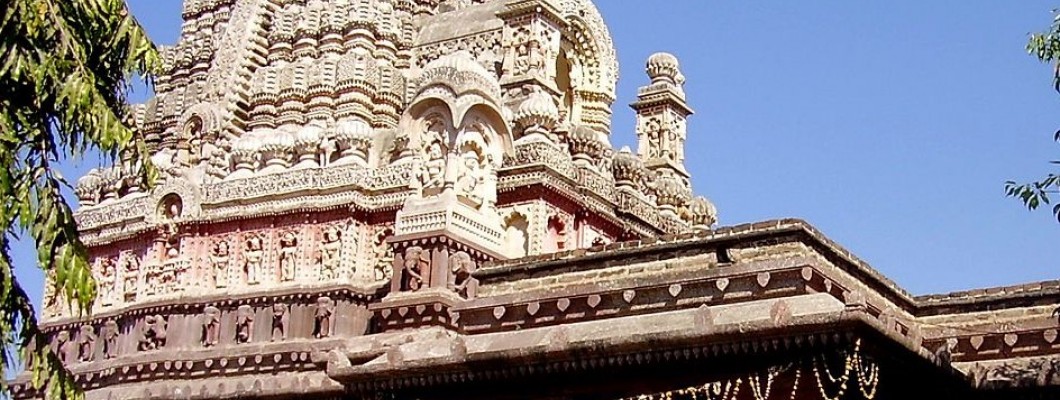
Located at a village called Verul which lies at a distance
of 11 km from Daulatabad (Devagiri) and 30 km from Aurangabad, Ghrishneshwar/
Grushneshwar, Jyotirlinga Temple is an ancient temple dedicated to Lord Shiva.
It is one of the 12 Jyotirlinga shrines mentioned in the Shiva Purana. It is
believed as the last or twelfth Jyotirlinga on the earth. The temple lies very
near to the Buddhist caves of Ellora, only half a kilometer away.
Location Maharashtra, Aurangabad, Mumbai
Legend
There are two legends surrounding the origin of Grishneshwar
shrine. In the first one, Lord Shiva and
Parvathi devi were staying near the Shivalay. One day, the Goddess mixed
the vermillion with Shivalay water to apply on her forehead. The vermillion
transformed into a Linga and a radiant light emanated from it. She named it
Grishneshwar since the Linga came from the rubbing action of her fingers
(Grishna means friction).
The second legend is that a great Brahmin scholar Sudharm
was persuaded by his first wife Sudeha to marry her sister Ghushma as they were
childless. Ghushma used to make 101 Lingas, worship them and discharge them in
the nearby lake. Ghushma and Sudharm had a son, but over the years, blinded by
jealousy, Sudeha killed the boy in his sleep and threw the body into a lake. As
a deeply mourning Gushma continued with her morning ritual of worshipping the
Lingas, she saw her son emerging from the lake. Lord Shiva, pleased with her
devotion gave back her son and granted her a boon. Accepting Ghushma's request
to remain forever in the place , the Lord continued to reside there in the form
of a Jyotirlinga. Thus He also came to be called Ghushmeswar.
This Temple is part of famous 12 Jyotirlinga Darsan Yatra.
Architecture
The Grishneshwar Temple, built of red rocks, with a five
tiered shikara (temple tower) and stunning carvings exemplifies the
architectural brilliance of the past eras. On the way to the temple, the ten
avatars of Lord Vishnu are intricately carved in red stone. The temple has many
remarkable sculptures and carvings of Indian Gods and Goddesses. The wedding
ceremony of the Lord and Parvathi devi are pictured in beautiful murals. There
is a huge court hall built on 24 carved pillars. The presiding deity of Lord
Grishneshwar, in the form of Lingam, faces towards the east.
Picture courtesy:
commons.wikimedia.org
Culture
The city of Aurangabad, erstwhile part of the state of
Hyderabad, is heavily influenced by the
culture of that area in its language as
well as cuisine. It is one of the largest and fastest growing cities in India.
Being the tourism capital of Maharashtra, with some of the major rock-cut
architectural sites like Ajanta and Ellora, the area witnesses a steady flow of
domestic and foreign tourists.
Darsan Info
Temple Timings- 5.30 AM - 9.30 PM
During Shravan month - 3.00 AM - 11.00 PM
There are no special queues for darshan.
Abhishekam tickets can be purchased inside the temple
premises.
Darsan Dresscode
Men must remove their shirts/t-shirts when entering the
temple. Women are expected to wear Indian attire. Jeans, Shorts, Skirts etc are
not allowed.
Famous Festival
March - Mahashivrathri
(Feb/Mar)
August - Ganesh Chathurthi (Aug/Sept), Holy month of Shravan
September - Navratri (Sept/Oct)
November - Diwali(Oct/Nov)
Temple Rituals
Devotees are allowed inside the Grabhagriha of Grishneswar
Temple to touch the Shiv lingam
Special Rituals
Milk Abhishekam and offering of flowers can be done by the
devotees themselves
Additional Info

Eateries near Grishneswar Temple:-
Kailash restaurant
Ellora restaurant
Hotel Bhoj

Related Products